
Easing stress and promoting well-being: Estate planning for older adults

Easing stress and promoting well-being: Estate planning for older adults
Estate planning is one of the most important decisions to make as you get older. Thinking about illness, who would step in, or who gets what, often raises concerns, causing people to procrastinate. What surprises most clients is that a finished estate plan tends to reduce stress rather than add to it.
This guide from Ettinger Law Firm walks through why planning actually calms the mind, the documents you need, and how to begin estate planning with confidence.
Stress-Free Estate Planning at a Glance
Here's why estate planning matters:
- Estate planning is a wellness tool, not just a legal task. People with plans report less anxiety, better sleep, and more optimism than those without.
- A plan puts you in charge. You decide who manages your money, who makes medical choices, and where your assets go, rather than leaving those decisions to the state.
- Long-term care is a worry, but it is solvable. Many older adults will need some form of long-term care, and planning can protect a home and life savings.
- Documents matter. A will, trust, power of attorney, and healthcare proxy/living will will cover most of the "what if" questions.
- Starting is the hardest step. Working with an elder law estate planning attorney ensures your plan addresses the legal details and the social dynamics within your family.
Why Does Estate Planning Cause so Much Anxiety?
Estate planning causes anxiety mostly because it asks people to face uncomfortable subjects all at once, including illness, death, money, and family, and because the process looks more complicated than it is. In most cases, the worry comes from avoiding the task. Once you understand where the stress is coming from and begin taking small steps forward, much of the worry begins to fade.
1. Not Knowing if a Plan Is Needed
Many older adults worry that they don't have enough to make a plan. While this fear is common, it's based on a misunderstanding. An estate plan is about decisions, not dollars. If you own your home, hold a retirement or savings account, have items you care about, and have family or friends you care about, you have enough to plan for.
2. Facing What Could Go Wrong Feels Uncomfortable
No one enjoys picturing a future where they are sick or gone, and estate planning brings those images forward, which is enough to make many people put it off for another day. That reaction is normal. Writing down your wishes doesn't make anything happen sooner. It only makes sure your voice is heard if a hard moment arrives.
3. The Process Sounds Too Expensive
It's normal to worry that the cost of drafting documents and getting them notarized would be too much, especially if you don't think you have enough assets in the first place. However, you need to weigh the expense of proper planning against the costs of leaving things to chance. These include probate costs, a nursing home spend-down, a guardianship proceeding later on, not to mention relieving your children of burdens.
4. The Legal Side Looks More Complicated Than It Is
Wills, trusts, proxies, and powers of attorney can sound like a foreign language, and when something feels confusing, the natural response is to delay. In practice, a first meeting with an attorney is mostly listening. You describe your family and what you own, and a professional explains your options in plain terms.
5. Money and Family Can Feel Like Touchy Subjects
Talking about who inherits what or admitting that one child may need more than another can feel awkward. Blended families or an estranged relative can create a complex familial situation. It's normal to worry that these topics will upset the people you love. But avoiding the conversation leaves more room for confusion and hurt feelings later. These situations call for more planning, not less.
6. Unfinished Tasks Quietly Drain Your Energy
Tasks you have started but not finished take up mental space, causing hidden stress. The plan for your later years, that you keep meaning to handle, runs in the background of your mind, costing you more worry than the plan itself ever would.
How Does Estate Planning Reduce Anxiety for Older Adults?
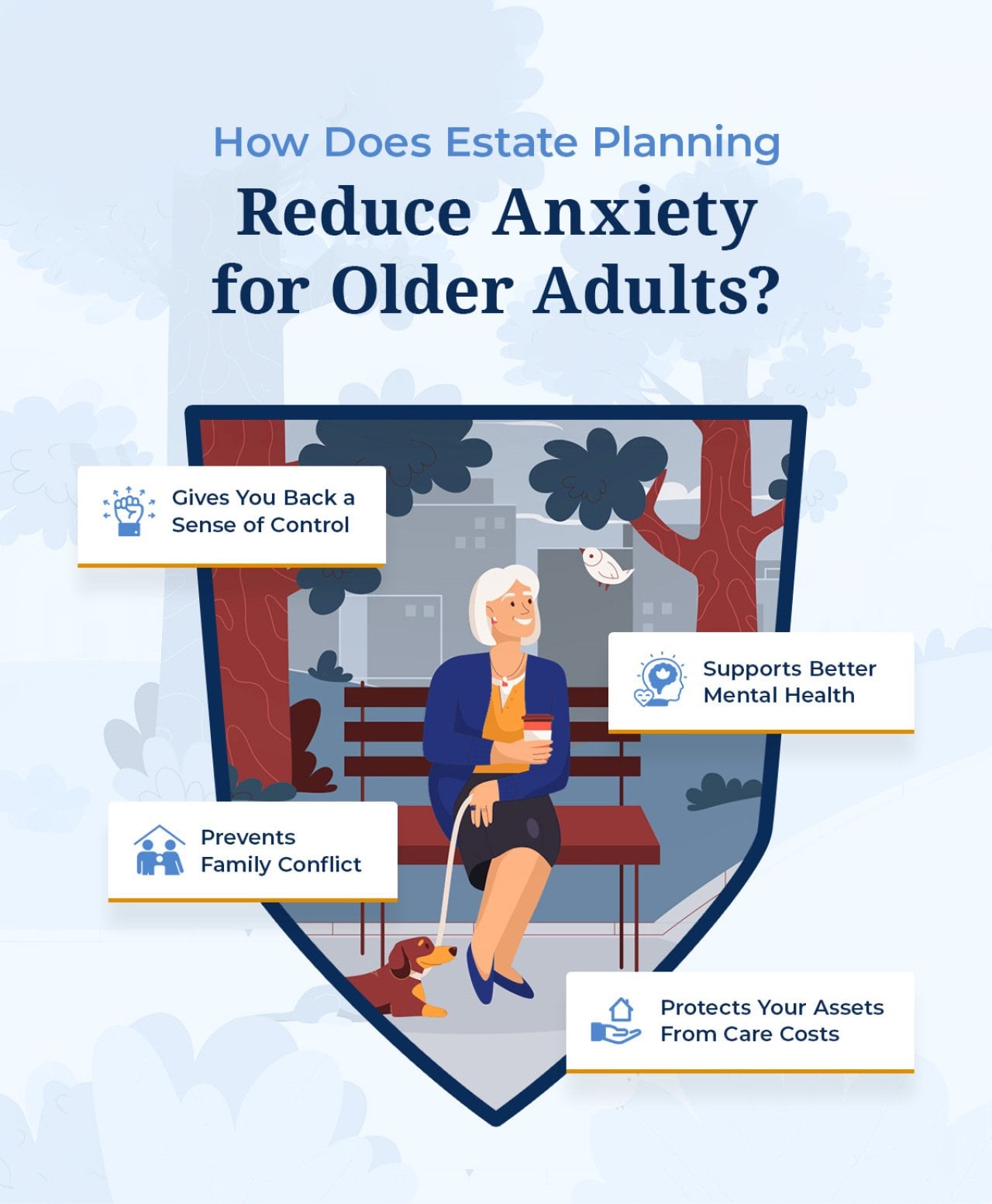
Estate planning reduces anxiety for older adults by replacing uncertainty with documented decisions, which restores a sense of control, lowers daily worry, protects family relationships, and removes the fear of losing everything to care costs. Putting off estate planning creates anxiety. Taking action is what brings relief.
Here's how estate planning can give older adults peace of mind.
1. Gives You Back a Sense of Control
An estate plan answers the quiet questions that worry you about getting older:
- What happens if I get sick?
- Who makes decisions for me?
- Will my family know what I wanted?
Once those questions have written answers, the mental load lifts. A plan lets you choose who manages your finances, who makes medical decisions, and how your assets are shared, which helps relieve stress.
2. Supports Better Mental Health
Having a plan can help you feel optimistic about the future. Older adults with an estate plan are less likely to feel anxious every day than those without one, and many planners worry less because their affairs are organized. Finishing a task you have been dreading gives you a real sense of release, and an estate plan is often the heaviest task to take on.
3. Prevents Family Conflict
Many older parents worry less about their own passing than about their children arguing afterward. Clear instructions in a trust, paired with honest conversations while you are still well, lower the odds of disputes and lasting rifts between siblings. When everyone understands the plan and your reasoning behind it, there is far less room for conflict during an already painful time.
4. Protects Your Assets From Care Costs
One of the largest sources of relief is knowing that care will not bankrupt the family. About 7 in 10 people turning 65 will need some form of long-term care, and the expenses can climb quickly. Planning with the right tools can protect a home and life savings from being spent on nursing care.
What Are the Benefits of Estate Planning for Older Adults Beyond Peace of Mind?
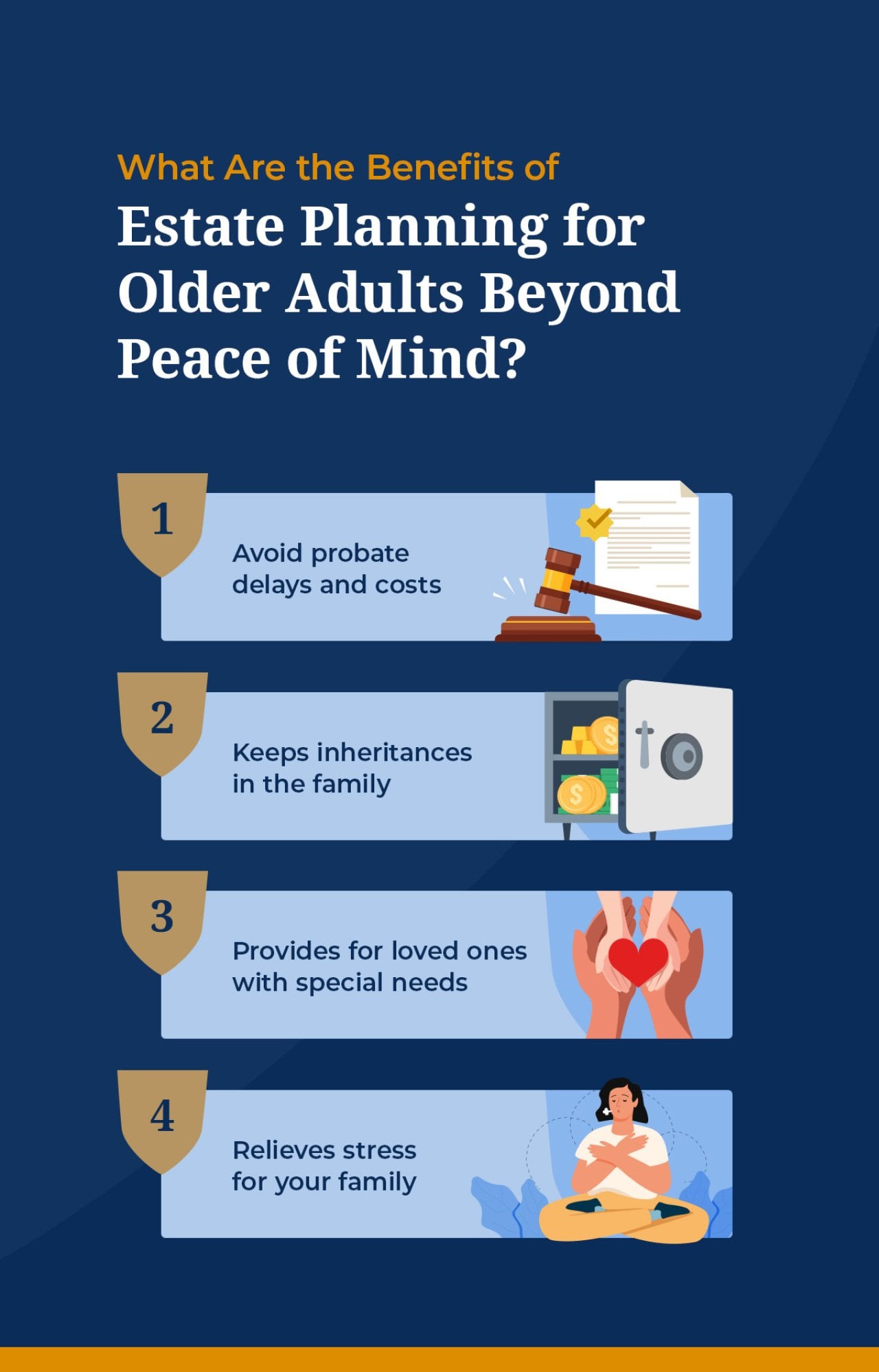
Beyond peace of mind, estate planning helps you avoid probate delays and costs, lowers or eliminates estate taxes, protects inheritances from divorces and creditors, provides for relatives with special needs, and eases the emotional burden for your family.
- Avoiding probate delays and costs: A revocable living trust lets assets pass to your intended beneficiaries without a probate court proceeding. Probate can take many months, sometimes more than a year, and may take up a significant percentage of your estate's value in fees. It is also a public process, which means your private financial details become part of the court's public record. A funded trust avoids that exposure.
- Reducing estate taxes: States like New York have an estate tax with a feature people call the "cliff," which can sharply raise the bill when your estate exceeds the threshold. Planning with the right trusts and lifetime gifts can keep more of what you built within the family rather than losing it to taxes.
- Keeping inheritances in the family: Properly drafted trusts can protect your child's inheritance from a future divorce, lawsuit, or creditors, so what you leave behind reaches your grandchildren rather than strangers or in-laws.
- Providing for loved ones with special needs: If you have a relative with a disability, a special needs trust can support them without risking their eligibility for programs like Supplemental Security Income (SSI) and Medicaid. It allows you to add to their quality of life while preserving the benefits they rely on.
- Relieving stress for your family: Facilitated advance care planning is linked to lower post-traumatic stress symptoms in grieving family caregivers and to higher rates of end-of-life care that matched the person's actual wishes. A clear plan takes the pressure off the people who would have to guess what you want, sparing them the weight of making hard calls in crisis without knowing what you would have wanted.
What Documents Do Older Adults Need for Estate Planning?
Most older adults need a will, revocable trust, power of attorney, healthcare proxy, and, where long-term care is a concern, a Medicaid Asset Protection Trust. Many older adults lack basic estate planning documents like a will. Yet, the relief of having these documents together lets you enjoy time with friends and family without worrying about what will happen to them when you're gone.
1. Last Will and Testament
Many people would not know what to do if a family member died today. A will spells out who receives your belongings and who will look after any dependents who cannot care for themselves. It's important, but it's not always enough on its own, because property that passes through a will still goes through probate.
2. Revocable Living Trust
A funded living trust is the workhorse for many older adults who want privacy, speed, and continuity. It holds your assets during your life and passes them to your family afterward without a long public court process, and also provides for someone to step in if you become unable to manage things yourself.
3. Power of Attorney
This document names the person who can pay your bills, manage your accounts, and sign on your behalf if you are unable to act. Without one, families often have to ask a court to appoint a guardian, a process that is slow and stressful. The right powers, drafted with care, can make a true difference if you're ever in a health crisis.
4. Healthcare Proxy and Living Will
These are arguably the most underrated stress-reducing documents. A healthcare proxy names the person who speaks for you at the hospital if you are unable to, and a living will records the care you would want or refuse. These advance directives help you get the care you want and ease the burden on the people you love.
5. Other Documents
Beyond these four critical, legally-binding documents, you can choose to include the following as part of your estate planning:
- Medicaid Asset Protection Trust (MAPT): This trust helps you avoid losing your home and life savings to nursing home costs. Timing matters with this document, so it's best to start drafting this early.
- Health Insurance Portability and Accountability Act (HIPAA) authorization: This short form lets your chosen family or friends speak to your doctors. It saves your loved ones the frustration of trying to get timely medical information.
- Beneficiary designations: Retirement accounts, insurance policies, and annuities pass to the beneficiary you named on the account, not through your will. Reviewing these designations and lining them up with the rest of your plan prevents surprises.
- A letter to your family: A letter of intent, sometimes called a legacy letter, is where you can communicate your values, wishes, and personal messages that don't belong on a formal document. This document is not legally binding, but many families treasure it.
How Can Families Talk About Estate Planning Without Stress?
Families can talk about estate planning by choosing a calm moment, starting with the reason behind it, being clear about what is being shared, and inviting questions. An honest conversation with your loved ones is the most important part of planning for future care, and it removes most of the awkwardness people fear.
- Pick a calm time and place. The topic of estate planning is heavy and can be awkward, so it's normal to want to rush through it. But a holiday meal or casual dinner is not the best place to bring it up. A weekday morning at the kitchen table works better.
- Start with the why, not the what. Open with something like "I want to make things easier for you," rather than a list of who gets which item.
- Be specific about what you're sharing. You can share your healthcare wishes, where documents are kept, and who is named in which role. Account balances and inheritance amounts can stay private if you prefer.
- Invite questions, not approval. Your adult children don't need to agree with every decision. They simply need to understand the reasoning, which makes it easier to honor your wishes later.
How Can Older Adults Start Estate Planning Without Anxiety?
Older adults can start estate planning without anxiety by taking it one small step at a time, beginning with a list of assets, then a conversation with family, then professional guidance, and regularly reviewing their documents. You don't need every answer before you begin because the process is built to fill in details with you.
1. Gather Basic Information
Put together an inventory of what you own, including your home, bank accounts, retirement accounts, and insurance policies, along with a short list of the beneficiaries who matter most. You only need a rough picture to start, and you can expand both lists as you continue the process.
2. Start a Conversation With Your Family
Let the people close to you know you are planning. The talk doesn't need to be exhaustive, but opening the lines of communication during this time can help ease your anxiety. A short note that you're getting your affairs in order is enough to bring everyone onto the same page and lower everyone's stress.
3. Consult an Elder Law Estate Planning Attorney
While the DIY approach sounds like a great way to manage costs, it carries real risk. Generic online forms often miss state-specific requirements and can fail at the exact moment they are needed. A conversation with an elder law estate planning attorney helps you understand your options and move forward with guidance. It also helps you answer any questions your family brings up objectively.
4. Have Routine Reviews
An estate plan is a living thing, not a document you sign once and forget. Marriage, divorce, births, and changes in health all call for updates.
Plan for Your Peace of Mind
Estate planning is one of the best forms of self-care for older adults. By planning for your care and your family, you ease daily worry, get better sleep, and smooth family relationships. The dread that surrounds estate planning almost always comes from avoiding the task rather than facing it, and that fear tends to fall away the moment the documents are signed. The hardest part is usually the first conversation.
Once you take that step, the rest is a series of clear, manageable decisions that leave you and the people you love on steadier ground.
This story was produced by Ettinger Law Firm and reviewed and distributed by Stacker.


