
HOLY COW! HISTORY: Secession, a very American tradition
“Secession” is back in the news these days. Oregon’s conservative western counties want to break away from the liberal part of the state along the Pacific Coast and join like-minded …
This item is available in full to subscribers.
Subscribe to continue reading. Already a subscriber? Sign in
Local news from Lexington's only local news source. Subscribe today.
Please log in to continue |
HOLY COW! HISTORY: Secession, a very American tradition



“Secession” is back in the news these days. Oregon’s conservative western counties want to break away from the liberal part of the state along the Pacific Coast and join like-minded neighboring Idaho. And they’re requesting President-elect Donald Trump’s help to make it happen.
State Sen. Liz Kruger is also calling for Connecticut, Massachusetts, New York and Vermont to secede from the U.S. and join Canada. The Manhattan Democrat says with Trump returning to the White House, those states have more in common with their neighbor to the North.
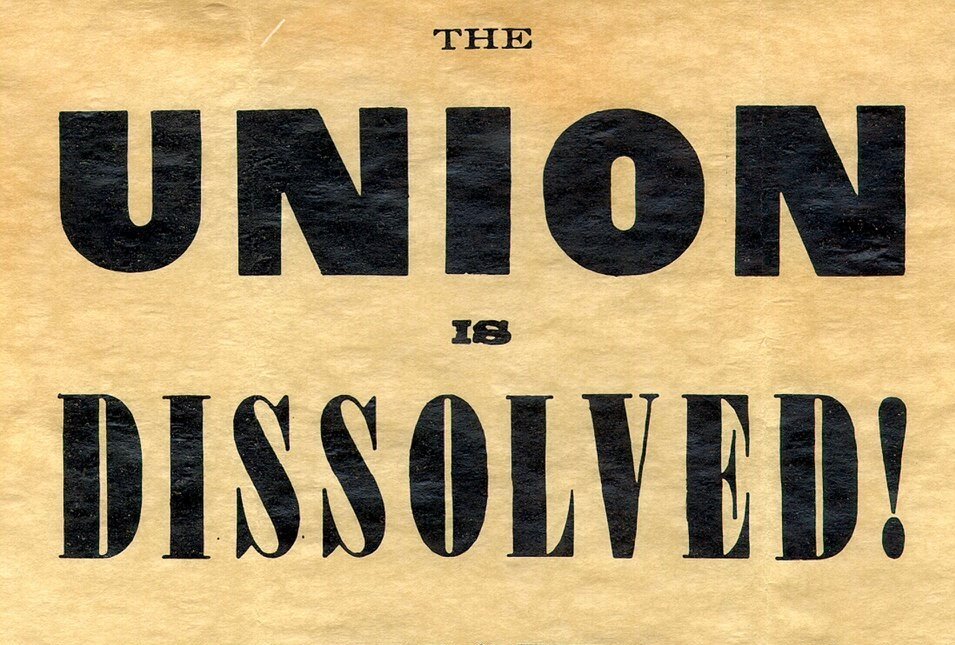
While this column steers clear of politics, it’s worth noting secession has crept into the national discussion with reliable frequency since our country’s earliest days. In fact, the first secession crisis wasn’t in the South, as you might think, but in the North.
The United States wasn’t even 40 years old when some New England states considered leaving it. Their grievances were many; they all boiled down to feeling they were getting the short end of the stick from the federal government. So in December 1814, 26 delegates from five states gathered for the Hartford Convention. While some loudly proposed seceding from the U.S., it was omitted from the final report issued in January 1815, though it ominously hinted that if things didn’t improve, the door remained open for a follow-up convention in Boston.
The delegates were Federalists, and when their party collapsed soon afterward, the prospects of New England’s secession collapsed with it.
Fast-forward 45 years to Dec. 20, 1860, when South Carolina actually cut its ties with Washington. Ten other Southern states, and parts of two others, followed. The federal government wouldn’t let them leave, and a four-year war with upwards of 700,000 fatalities followed.
It’s worth noting that the most successful secession effort happened during the middle of that conflict. In 1863, 48 counties in the Western part of Virginia seceded from the Old Dominion to form West Virginia. Since the region was largely Republican, the GOP-dominated Congress swiftly admitted the new territory to the Union, eager to line up an extra five Electoral College votes for Abraham Lincoln’s then-shaky reelection prospects. Ditto for Nevada the following year.
That’s right; West Virginia seceded from Virginia because it opposed Virginia seceding from the Union.
But secession, or the threat of it, wasn’t just a 19th-century phenomenon. Throughout the 20th century, it bubbled to the surface from time to time like a fizzy soft drink.
The strangest—and most amusing—episode happened in the southwest corner of Missouri in early 1961. Nestled in the Ozark Mountains with Arkansas to the South and Oklahoma to the West, the picturesque area depended heavily on tourism. So when the state highway department omitted it from the list of recommended places to visit on the official highway map, it was a serious blow to the county’s bottom line. Even worse was how bureaucrats in the state capital blew off upset county officials.
A squeaky wheel gets the grease, they say, and the locals got very screechy. They announced they had “seceded” from the state of Missouri and created “McDonald Territory.” They printed special territorial stamps, renamed the sheriff's office the “territorial militia,” and placed “Welcome to McDonald Territory” signs at the county line.
It was all meant as a light-hearted protest to draw attention to the problem. The spring of 1961 was the centennial of the start of the Civil War, which, you’ll recall, began with a real secession crisis. The folks in McDonald merely piggybacked on the interest. And it was great fun—until things suddenly turned serious.
A Native American leader proposed making it an independent Indian nation. Talk emerged of McDonald County joining Benton County, Ark., and Delaware County, Okla., to create a 51st state. Since Benton County is home to corporate giants Walmart and Tyson, it could have been an economic powerhouse.
Then Arkansas officials began quietly making phone calls to see if McDonald might want to join the Land of Opportunity.
Officials in Jefferson City, Mo., ran up the white flag before things got out of hand. A compromise was reached. The state would no longer include private commercial operations in its recommended places to visit, and McDonald Territory would fade into history.
Secession keeps turning up in this century, too. And it’s not limited to states and counties. 20 years ago, folks in Killington, Vt., had simply had enough. For every $10 sent to the state in various taxes, only $1 was returned. Frustrated residents voted in a landslide on March 2, 2004, to secede from the Green Mountain State and join New Hampshire—some 25 miles away. That state’s legislature created a commission to negotiate about Killington joining it, provided Vermont formed a similar commission. Two decades later, it’s still waiting.
Now it’s Oregon and Idaho’s turn to bicker. Will there be a breakup? Who knows? But this much is certain: As long as there are disgruntled Americans, someone will always suggest going their own way. For as the old saying reminds us, “If at first you don’t secede….”
Have comments, question or suggestions you’d like to share with Mark? Message him at jmp.press@gmail.com.


Comments
No comments on this item Please log in to comment by clicking here