
Midlands water politics boil over: Is Batesburg-Leesville mayor scapegoat for S.C. ethics issue?
Only 1 official charged among many receiving per diem, and it may have started with local disagreements
The South Carolina Ethics Commission penalized a Midlands mayor who gets a per diem by serving on Lexington County’s largest water supplier, a role and reimbursement many other Midlands mayors …
This item is available in full to subscribers.
Subscribe to continue reading. Already a subscriber? Sign in
Local news from Lexington's only local news source. Subscribe today.
Please log in to continue |
Midlands water politics boil over: Is Batesburg-Leesville mayor scapegoat for S.C. ethics issue?
Only 1 official charged among many receiving per diem, and it may have started with local disagreements
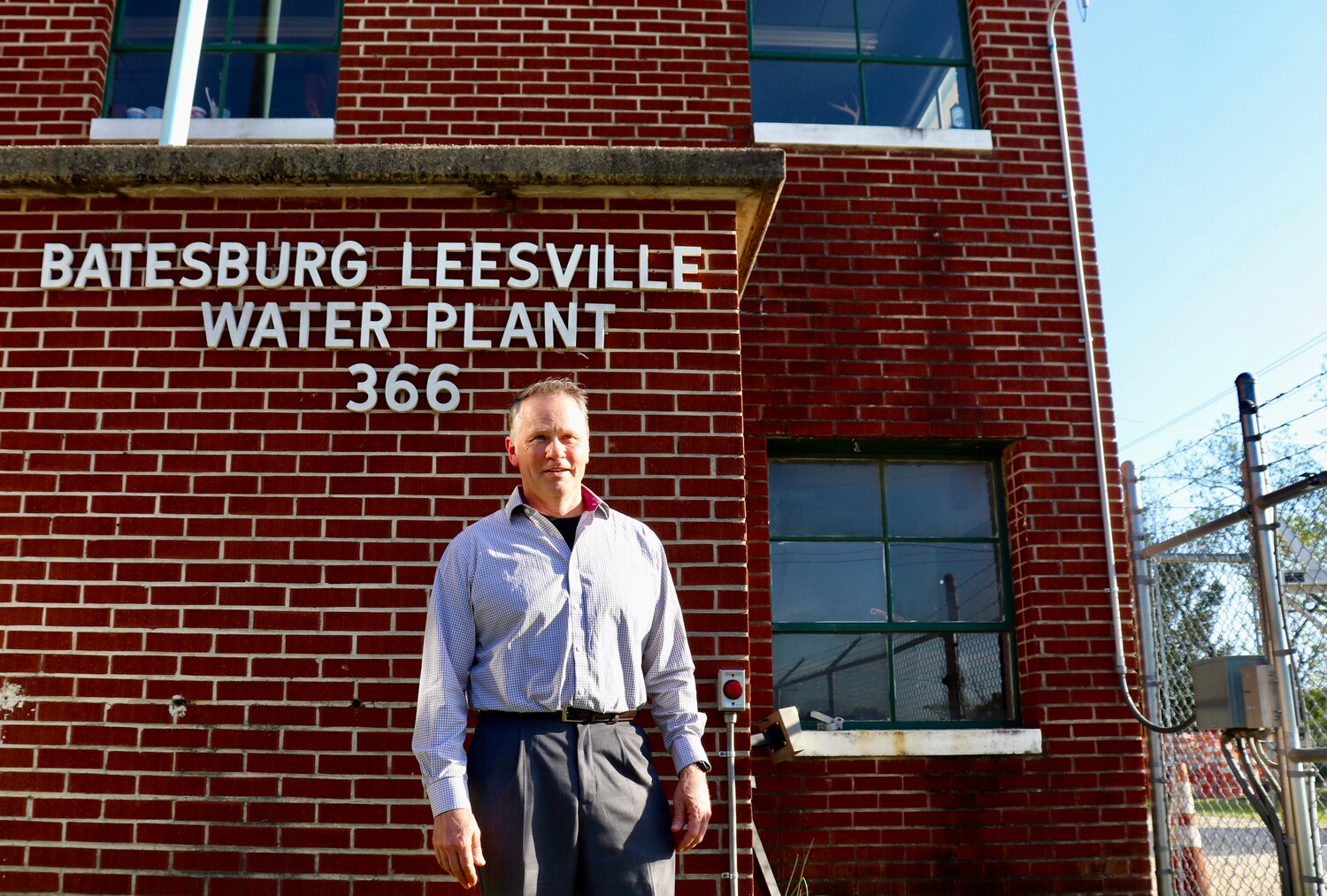


The South Carolina Ethics Commission penalized a Midlands mayor who gets a per diem by serving on Lexington County’s largest water supplier, a role and reimbursement many other Midlands mayors (and other kinds of public officials) also have but haven’t faced repercussions for.
This mayor has appealed the decision, saying he was advocating for his rural town’s water needs just as all the other mayors and council members sitting on such commissions do, which made him wonder if he’s a scapegoat for the ethics commission’s problem with the water commission’s per diem.
What brought his name to the ethics commission in the first place, the two-term mayor said, was drama among his own council.
So, a perfect storm has ensued, prompted by the state’s definition of economic interest, a nearly century-old water plant and a longtime councilman’s opinion that the loss of an old water plant means loss of control. The mayor who was charged worries that other Lexington County mayor/councilmember-water commissioners might now be less likely to advocate for their residents’ water needs and bills since one of their own was fined because of the same per diem they’re getting.
It starts with the per diem
Every commissioner on the Joint Municipal Water and Sewer Commission, which is Lexington County’s main water supplier, receives a $250 monthly per diem for expenses incurred from their role on the water commission, including food and travel.
The commissioners include Chairman Frank Shumpert, mayor of the Town of Pelion; Vice-Chairman Joseph Hardee, who was elected to represent the Gilbert-Summit Rural Water District; Troy Bivens, mayor of the Town of Gaston; Cindy Campbell, mayor of the Town of South Congaree; Tim James, councilman for the City of Cayce; Bobby Keisler, a former Lexington County councilman; Hazel Livingston, mayor of the Town of Lexington; Viola "Frances" McDaniel, mayor of the Town of Swansea; Temus "Tem" Miles Jr., mayor of the City of West Columbia; Juston Ricard, mayor of the Town of Springdale; and Lancer Shull, mayor of the Town of Batesburg-Leesville.
Each of these public entities is either fully or partially in Lexington County. Some have their own water supply, but every member stands to benefit from having its voice represented on the commission.
“[It’s] basic economies of scale,” Municipal Association of South Carolina Field Services Manager Charlie Barrineau told the Chronicle. “The benefit of a joint municipal water commission is that utility systems should become more efficient as more customers are added, which should lead to lower costs for each customer.”
Only one of the water commissioners has been penalized by the state ethics commission.
That was Shull, Batesburg-Leesville’s mayor.
Earlier this year, the ethics commission charged him with three counts of attempting to influence a governmental decision in which the respondent had an economic interest and three counts of failure to recuse from a governmental decision in which the respondent had an economic interest.
The economic interest is the per diem.
Complaints filed by Batesburg-Leesville Town Council members Stephen Cain and Shirley Mitchell are what brought Shull’s name to the attention of the state ethics commission in the first place.
The ethics commission confirmed the following timeline with the Chronicle: It started investigating Shull when a complaint was filed on Oct. 19, 2023, by Cain and Mitchell. Probable cause was found on Sept. 19, 2024. A hearing was held on Feb. 20, leaving Shull with six charges and $1,300 in fines – $50 for each count plus a $1,000 administrative fee.
Shull appealed the decision, and an appeal hearing is scheduled in July.
Three complaints were filed against Shull in total since 2021; some only list one complainant, either Cain or Mitchell. It was, however, Cain and Mitchell’s Oct. 19, 2023, complaint at the heart of these ethics charges against Shull.
“Batesburg-Leesville has the capacity to service this project with water and sewer independent of the Joint Municipal Water and Sewer,” Cain wrote in a complaint. “Our town attorney’s opinion is that a per diem is not a thing of value, ergo the mayor can vote on the project as a member of both boards?”
Cain and Mitchell’s 2023 complaint maintains that Shull should have recused himself from Batesburg-Leesville Town Council meetings on items involving the town potentially starting a contract with the joint water commission, since the mayor receives a monetary benefit from serving as a water commissioner.
Documents say Shull did not recuse himself from town meetings on items involving the water commission, but documents also confirm that he did recuse himself from water commission meetings on items involving the town.
Shull told the Chronicle that because he recused himself from one and not the other, he only voted once for his town to enter into the contract.
“I don’t need anyone to give me a per diem,” he said. “It’s a customary thing. I was just doing what everybody else has been doing for 20 years. … I’m not in an orange jumpsuit. I didn’t do anything illegal.”
‘Not the same thing as payment’
The water commissioners have been receiving a per diem for longer than Shull has been serving as one.
A previous ethics complaint from 2008, a decade before Shull joined, accused the water commission of compensating board members against what the complainant interpreted as allowed under state statute. That investigation was dropped, ruling that per diem allowance is not the same thing as payment.
A brief assembled by Davis & Frawley, Attorneys at Law, to be presented at Shull’s July appeal hearing details the purpose of the per diem: “In addition to the monthly meetings of the JMWSC, commissioners have other duties during the month that require travel, according to John ‘Jay’ Nicholson, the general manager and chief executive officer of the JMWSC. These duties include traveling to the offices of attorneys and consulting firms. He stated that the monthly per diem was intended to cover all expenses – mileage, lodging, food and incidentals.”
The brief details two kinds of per diem permitted by the Internal Revenue Service: an accountable per diem in which an individual is reimbursed based on receipts that individual provides, and an unaccountable per diem, which the brief defines as “a flat rate per day set by the IRS and is accountable only to the IRS.”
“[Nicholson] stated that after consulting with an attorney and talking to an ethics investigator informally who was investigating another matter, the JMWSC administration opted for an unaccountable or nonaccountable per diem plan,” the brief states. “Compared to the $250 per diem of other states, awarded either on a per day or per meeting basis, the $250 monthly per diem of the JMWSC is modest and in line with the per diem of other states.”
Nicholson told the Chronicle there are currently no plans to do away with the monthly per diem.
“Our per diem practice for commissioners is consistent with legal counsel from a tax attorney to ensure IRS compliance, as well as advice from an investigator following a previous ethics complaint that was subsequently dismissed,” he said. “I have no plans to make changes or adjustments to commissioner per diem while this complaint is being defended.”
Batesburg-Leesville’s 90-year-old water issue
It’s been almost 35 years since Batesburg and Leesville merged into one municipality, perhaps fulfilling a prophecy foretold by the old high school nearly a century ago when it became the first joint project of the then-two towns.
Today, the 7.7-square-mile town sits in both Lexington and Saluda counties, so this Midlands municipality is used to juggling identities, and it’s that juggling of identities and opinions that may be the cause of the tension palpable in town council chambers, especially since the water system issue hit meeting agendas.
“TOWN OF BATESBURG MUNICIPAL WATER WORKS BUILT IN 1935,” reads tarnished signage on the facility still bearing the town’s 5,600-plus residents’ water needs.
The ground floor of the plant is dense with a chlorine smell, the piping is reminiscent of Titanic-age ships, and rust forces every railing into forgetting its original color, but the brick siding still stands sturdy.
For almost a century, a single reservoir has kept this facility and nearby faucets running.
The Department of Health and Environmental Services issued a consent order in 2013 requiring the town to find a sustainable water solution, whether that be making upgrades to the existing plant or finding a new provider altogether.
Some town leaders say the old plant’s time has come, while others say it's still got some juice.
When Shull won the mayoral seat in December 2017, his No. 1 objective was to find a new source of water, he told the Chronicle, so he joined the JMWSC in January 2018. He said it was a no-brainer to vote in favor of his town’s water needs when the issue came up on town council agendas.
Shull told the Chronicle that in looking for a new source of water, council reviewed three options: the JMWSC, Saluda County Water and Sewer Authority or an upgrade to the 90-year-old water plant.
Ultimately, pen was put to paper on the JMWSC option with Shull’s backing, saying it was the best option for accommodating future growth and keeping area water bills pretty much the same.
Two people on council say that joining the water commission wasn’t the best option, though.
A solution reached
A decision to source water with the JMWSC has already been made official as of 2022. Contracts signed. Ground broken. Funding provided. The nearly $35 million project is underway and set for winter 2025 completion. That’s $15 million in state funding through grants and loans to the water commission for the project and $20 million in federal funds awarded to both Batesburg-Leesville and the water commission ($10 million each). A shiny new water tower toting the commission logo and the town’s logo currently towers over U.S. 1 off Old Field Road.
“After being placed under a DHEC consent order in 2013, Batesburg-Leesville needed to secure a safe, reliable source of drinking water for its customers,” according to the South Carolina Rural Infrastructure Authority website. “This 40-year contract is designed to meet that need.”
Barrineau, from the state municipal association, said there are significant benefits for a town to join a joint municipal water provider.
“In many cases, another pro [for a town joining a water commission] is the advantage of having a single source (for water) or single discharge point (for sewer),” he told the Chronicle. “There are efficiencies to the permitting process.”
Not everyone wants the change
The most outspoken person against Batesburg-Leesville sourcing water with the JMWSC is longtime councilman Stephen Cain. He is not only one of the people who reported Shull to the state ethics commission, but he also brought his case to the South Carolina Law Enforcement Division.
SLED interviewed Shull once in 2022, then threw out the case.
Cain maintains Batesburg-Leesville will not be able to control its growth once the JMWSC runs the town’s water.
“One downside is that you give up some control, since the other members of the joint agency also get to vote,” Barrineau, with the state municipal association, told the Chronicle. “Certainly, growth and unwanted growth is possible. However, the more important focus point should be without reliable utilities, there’s a greater risk of less growth or even decline. As utility operating costs will always grow, without some growth, existing customers will be left to share the increased cost to operate the system.”
Earlier reporting from the Chronicle details that the town has used a creek-fed pond to supply drinking water for more than 90 years. But with the town's population seeing record growth, the small reservoir isn’t enough.
During multiple town council meetings, Cain has mentioned wanting to void the contracts with the JMWSC.
Councilman David Bouknight responded during one meeting and said, “If these contracts are voided, this will bankrupt the town because we will be sued by every contractor out there for every dime they’ve spent.”
A motion that could lead to voiding the contracts failed with a 3-6 vote.
Town Manager Jay Hendrix told the Chronicle the same thing: It would be very costly for Batesburg-Leesville residents if the contract with the JMWSC is undone.
Cain maintains the decision to enter into a contract with the water commission “undermines our community’s strength” and “reduc[es] our status from water providers to customers.”
More about Cain
Cain has been representing the town’s District Three for nearly two decades, but not without controversy.
Then-Mayor Rita Crapps, who would eventually encourage Shull to succeed her, had Cain removed by officers during a 2014 council meeting after they got into a dispute.
Additionally, it has been reported that in June 2015, an investigation began after a resident’s complaint alleged Cain was not living in the state.
Documents from investigators state Cain had cut his power off from his residence, and his voter registration card was updated with a different address. The State newspaper reported Cain did not attend over eight monthly meetings.
Cain ran for mayor in 2021, receiving 34% of ballots cast; Shull won re-election to the seat with 66% of ballots cast.
Cain even held Shull’s water commission seat for a very, very short time.
In a little over a week, Cain was appointed to the water commission and then removed from the water commission by the town council, and Shull participated in both votes; Cain participated in his own appointment, as well.
The brief to be presented at Shull’s July appeal hearing, mentioned earlier in this story, says Shull participated in his own reappointment to the water commission on Jan. 13, 2020, and again on Jan. 21, 2020. He was reappointed by a margin of seven to two. He participated in his December 2023 reappointment, too, and was reappointed to the water commission by a margin of six to two, the brief states.
Documents provided to the Chronicle from the ethics commission detail what happened at the Jan. 13, 2020, meeting. “Council voted against placing [Shull] on the JMWSC and instead appointed Councilmember Stephen Cain in a 5-4 vote.”
Shull does not intend to run for mayor again, telling the Chronicle his sister’s recent death is the leading reason.
Cain told the Chronicle he does not intend to run for mayor again.
“I’ve been privileged to serve my family and friends residing in Batesburg-Leesville Council District 3 for nearly 20 years. I do plan to seek reelection to our council seat; I have no intention to run for mayor,” Cain told the Chronicle.
As for Cain’s desire to undo the town’s contract with the water commission, he said, “Never stop fighting till the fight is done. ….If Lancer wins his appeal, I will extend my congratulations. Only the voters can resolve these types of political disagreements.”
More about Shull
Shull was born and raised in Missouri and moved to Batesburg-Leesville in 2009, but starting in his 20s, he lived the actor’s life, eventually moving to Los Angeles (fun fact: he was in Season Three, Episode Five of the Netflix drama “Outer Banks”). It was in Batesburg-Leesville, however, where Shull raised his two kids as a single parent.
“I like the small town,” he said. “If anything happens to someone on the road, somebody is going to be there to help.”
In 2015, he was elected to the Lexington County School District Three Board of Trustees, where he served until 2017. During his time on the board, he received a call from Crapps, who told him she would not be seeking re-election and encouraged him to consider running for the position.
He entered the mayoral race and won, taking office in 2018.
“I think people wanted something different,” he said. “I’m an outsider, but I also served in my community from the day I moved here.”
In addition to serving as mayor and water commissioner, Shull has been president of the Batesburg-Leesville Rotary Club, chairman of the Batesburg-Leesville Chamber of Commerce and a member of the Lexington County Accommodations Tax Advisory Committee.
What’s next
Shull’s July hearing will determine the next steps for Shull, the water commission and Cain.
Again, as of now, JMWSC’s general manager and CEO Nicholson says there are no plans to change or do away with the commissioners’ per diem.
The brief for the July 17 appeal leans heavily into the definition of economic gain, arguing that Shull does not stand to gain from his dual roles on the water commission and town council, even while the contracts to source water with the JMWSC are underway.
It also questions the integrity of the complaints filed against Shull, adding that neither Mitchell nor Cain testified at the hearing earlier this year that resulted in Shull’s fines.
Mitchell and Cain voted against his reappointment to the water commission, and by filing the complaint, they "voluntarily and intentionally made themselves available to the Court," according to the brief, as well as to cross-examination by Shull.
The state ethics commission told the Chronicle the filing of a complaint does not automatically trigger an investigation into the person who filed it.
All agency investigations are prompted by a complaint, but the ethics commission can file its own complaint and start an investigation thereafter.
That’s what happened when Cain made himself available to the commission by filing complaints against Shull.
According to ethics commission documents, there is an upcoming hearing where Cain may be penalized with similar charges resulting from his one week on the water commission, where he is being accused of attempting to influence a governmental decision in which he had an economic interest by participating, nominating himself and voting to replace Lancer Shull on the JMWSC at the Jan. 13, 2020, town council meeting.
Cain told the Chronicle that an agreement has been reached to prevent a hearing, but the newspaper could not corroborate that with the ethics commission, as this was just before press time.
The focus of the July hearing, however, is Shull and the per diem, which affects the whole of Lexington County’s largest water supplier.
The Chronicle requested comment from the other water commissioners and was instead referred to the brief assembled by Davis & Frawley, Attorneys at Law.
The Chronicle will cover the July 17 appeal hearing. Stay tuned.


Comments
No comments on this item Please log in to comment by clicking here