
The Legend of Johnny Boozer
Johnny Boozer left quite a legacy when he died of cancer at age 47 in 1986.
This item is available in full to subscribers.
Subscribe to continue reading. Already a subscriber? Sign in
Local news from Lexington's only local news source. Subscribe today.
Please log in to continue |
The Legend of Johnny Boozer
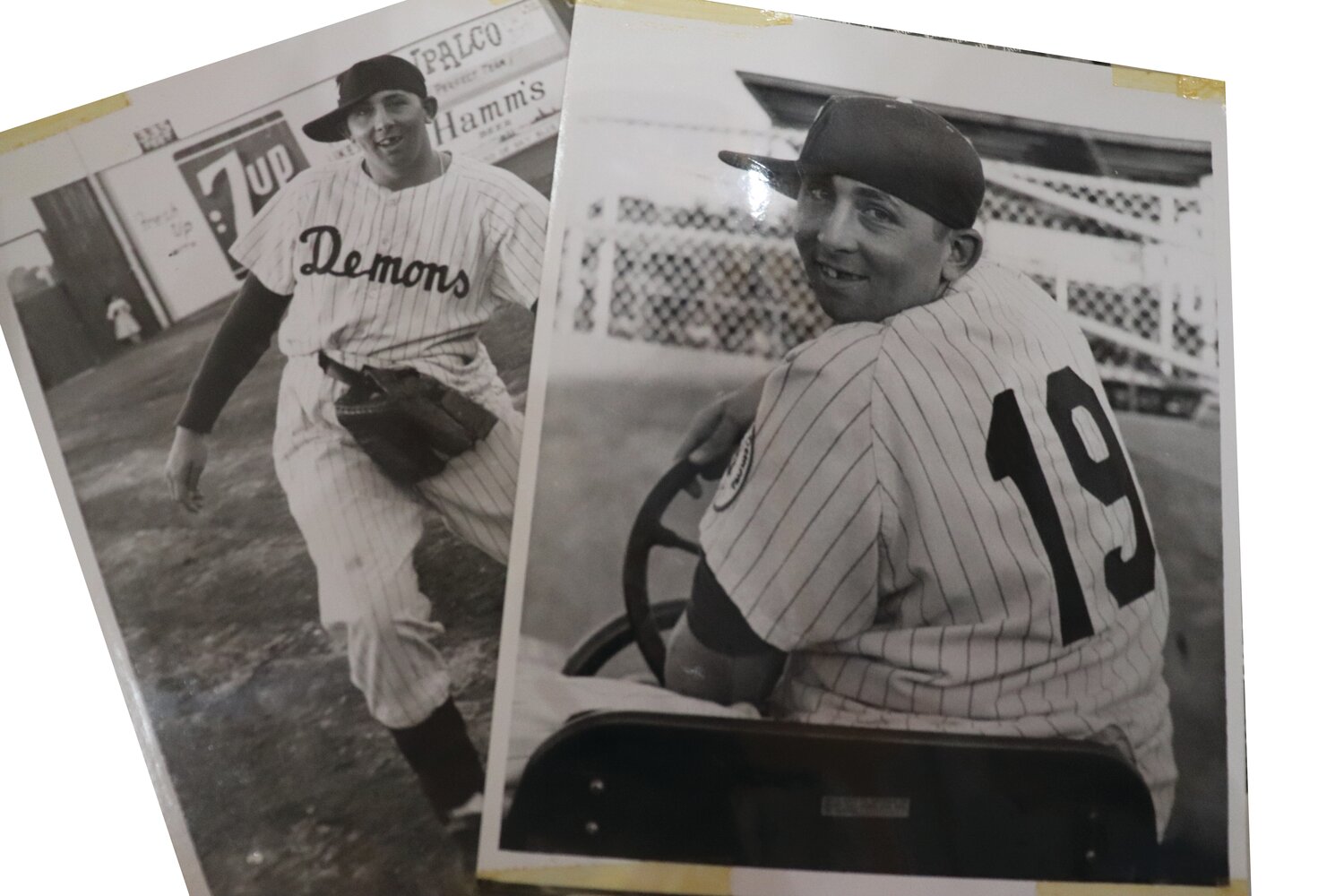


Johnny Boozer left quite a legacy when he died of cancer at age 47 in 1986.
He pitched parts of seven seasons in Major League Baseball with the Philadelphia Phillies and is credited with being the founder of what is now the Lexington County Recreation and Aging Commission.
Beyond that, he was Johnny Boozer, loved by all as a prankster, eccentric and an all-around charming guy.
The mere mention of his name to those who knew him garners a similar reverential refrain. “He was a character,” they say.“He was a card.” Others are a bit more flippant, saying, “He was crazy.”
Mind you, the stories about Boozer have likely been embellished over the years, picking up steam and nuance as they were passed along. Given his nature of being just ever-so-slightly off-kilter, there is every reason to believe there is at least a kernel of truth to every tale.
Friends say Boozer was a little goofy-looking. He had jumbo-size ears and a long, thin face. He loved playing the role of Lexington’s Barney Fife, from the long-ago Andy Griffith Show on TV.
Just one day after having his braces removed in high school, Boozer lost his front teeth while playing center on the Lexington High School football team. Later in life, he cocked the ballcap sideways atop his head, removed his dentures, bugged out his eyes and wagged his tongue at strangers.
Boozer had an affinity for insects. He loved to snatch a grasshopper in one hand, then pop it in his mouth, holding the creature beneath his tongue. Imagine the surprise of the next person he conversed with when the grasshopper leaped out at them. Roaches, flies, ants. He was non-discriminatory when he preyed on all creatures, entertaining friends by capturing them and chowing down.
As much as he played the role --- almost always with a chaw of Levi Garrett tobacco lodged in his cheek --- Boozer was anything but a country bumpkin.
Friends fondly remember him as being wily smart. He was goal-oriented. He set high standards for himself and for others and was hellbent on attaining them. He also had a robust heart. He loved his community and lived to serve its citizens.
Boozer inherited a love for baseball from his father, John, who was a semi-pro catcher when he was not working at the West Columbia Water Service Department.
The younger Boozer played strictly sandlot baseball growing up in the Red Bank area of Lexington County. His first game of organized baseball came in 1954, the first season that Lexington High fielded a team.
Boozer caught the eye of Major League Baseball scouts as a pitcher at Lexington High, both during his sophomore and junior seasons.
Then he pitched every inning of every game for Lexington during his senior season of 1956, striking out 152 batters in 70 innings while fashioning a 10-1 record and microscopic 0.25 earned run average. In one seven-inning game, Boozer struck out 18 batters.
On graduation day of 1956, Major League Baseball scouts lined up at the Boozer home in hopes of offering him enough money to sign a professional contract. There was no draft of players in those days.
The Boston Red Sox had the inside track and waved $4,000 at the 18-year-old, roughly equivalent to $47,000 today.
Boozer, whose parents pushed him to postpone baseball in pursuit of a college degree, told the scouts, “It will have to be a great deal more money than that.”
Boozer was a B student in high school and entertained scholarship offers from Clemson, Newberry and Wofford. He signed with the Terriers and posted an 8-2 record as a freshman in 1957 on a team that finished the season with a 13-4 mark.
His sophomore year did not go as well, yet he was dominant during the summer between his first two seasons while pitching in Halifax, Nova Scotia. He once again caught the eye of pro scouts while pitching the following offseason in the semi-pro Dutch Fork League and a semi-pro league in Fayetteville, N.C.
A scout for the Cincinnati Reds appeared to be the favorite at signing Boozer this time around. The scout carried a contract to the Boozer home on Sunday, July 6, 1958. But Harry “Flick” Eleazer, a scout for the Philadelphia Phillies who had developed a friendship with the Boozer family, had other ideas. Boozer, being a minor, needed his mother, Zela, to sign the contract.
“Mrs. Boozer,” Eleazer said during a phone call to the home that day, “You and I are both good Lutherans and conscientious Christians. I don’t need to tell you how important it is to keep the Sabbath holy. Now, if you insist on signing that contract with Cincinnati, why don’t you wait until Monday to do it? If you let Johnny close this deal on Sunday, it may, for all we know, ruin his baseball career.”
Boozer’s mother, a long-time teacher in the Lexington area, did not sign the contract. Eleazer was the first to arrive at the Boozer home the next morning, bringing with him two tickets to the Major League Baseball All-Star Game the following day in Baltimore. Boozer packed his bag and headed eight hours north to Baltimore with the Phillies’ scout. They registered at a hotel under aliases.
The morning after the All-Star game, Eleazer suggested the two make another drive further north, this time two hours to Philadelphia. When they arrived at Connie Mack Stadium, Phillies catchers Stan Lopata and Andy Seminick were there to receive pitches from Boozer. Viewing the 15-minute workout were Philadelphia President Bob Carpenter and Manager Mayo Smith.
Later that evening, Boozer agreed that his mother would sign a contract with the Phillies. The signing bonus was $20,000, the equivalent of $222,500 today, made in three payments over three years. He eventually earned another $5,600 in bonus money by reaching the major leagues and for graduating college.
Much of the bonus money went toward building a house that still stands on Morgan Street off U.S. 1 in Lexington.
Boozer launched his climb up the Phillies' minor-league ladder in Brunswick, Ga., of the Class D Georgia-Florida League. In those days, navigating the minor leagues was essentially a five-step process. Find success one season at one level and progress to the next.
From his signing, Boozer was considered a top pitching prospect in the Phillies organization. The 1961 season with Chattanooga of the Class AA Southern Association established Boozer as a future member of the Philadelphia Phillies' pitching staff.
He ran up a 19-9 record with a sparkling 2.61 earned run average and was named to the league’s postseason all-star team.
Boozer began the 1962 season at Buffalo of the Class AAA International League. Then, at mid-season, Boozer received the call from the Phillies. The kid who strengthened his arm by skipping rocks across ponds in Lexington County was in the big leagues. He was 24.
Boozer’s major-league debut came on July 22, 1962, in the first game of a doubleheader against the Milwaukee Braves at Connie Mack Stadium.
At 6-foot-3 and 200 pounds, the right-handed Boozer was an imposing figure on the pitcher’s mound. He featured “a live fastball and fine breaking curve,” according to the back of his 1966 Topps baseball card.
Entering the game in the fifth inning with Milwaukee leading 10-9, Boozer struck out the first batter he faced, Tommie Aaron, the brother of Hank Aaron. Boozer then retired Frank Bolling on a pop-up to the second baseman and Don Nottebart on a strikeout.
Boozer spent parts of the next seven seasons with the Phillies. He pitched in 171 games, all but 22 as a reliever. He won 14 games, lost 16 and posted a rather pedestrian 4.09 ERA.
He was at his best July 18, 1963, in a victory against the Houston Colt .45s, now the Astros. Boozer needed only 94 pitches to go nine innings and limit Houston to one run on three hits.
Boozer seemed to relish the role of class clown wherever he played. He also enjoyed entertaining his teammates by playing a harmonica or ukulele on bus rides and in the clubhouse. Early in his career, Philadelphia pitching coach Larry Shepherd instructed Boozer to cease playing the team’s “funny man” and get serious about his profession.
Boozer left his mark in other ways. He was the victim of being in the wrong place at the worst of times for the infamous “Phillies Phold” of 1964. The club held a 6½-game lead in the National League with 12 games remaining. Then it dropped 10 consecutive games, including one in which Boozer was the losing pitcher, and eventually the NL pennant to the St. Louis Cardinals.
Boozer was ejected before throwing a pitch when summoned from the bullpen during a Philadelphia game against the Mets on May 2, 1968 at New York’s Shea Stadium.
Umpire Ed Vargo called a “ball” on Boozer for placing his hand to his mouth on the pitcher’s mound. Phillies Manager Gene Mauch objected, claiming that the gesture was not illegal while a pitcher was warming up. Mauch ordered Boozer to do it again, and when he did, Vargo called another “ball.” When it happened a third time, Vargo ejected Boozer from the game.
Boozer joins Nels Potter in 1944, Phil Regan in 1968 and Gaylord Perry in 1982 as the only players in MLB history to be ejected for violating the spitball rule.
Boozer was never found guilty of throwing a spitball. Yet there is every reason to believe that his long-time habit of chewing tobacco led him to employ the illegal pitch. Curt Boozer, who resides in Chester, said his father related to him how he hid K-Y Jelly lubricant behind his large ears and used it to doctor the baseball.
When asked by a Philadelphia reporter about using a foreign substance to help change the trajectory of his pitches, Boozer responded: “I refuse to answer on the grounds that I might tend to incriminate myself. You’ve been talking to rumor speakers.”
Boozer eventually opted to retire following the 1969 season rather than shuffle between Philadelphia and its Class AAA affiliate in Eugene, Oregon.
He was 30 years old and his marriage to Anne Shepherd of Lexington was in its 11th year. The couple had two young children. Following the final game of that ’69 season, Boozer bid farewell to Philadelphia and his professional baseball career by nailing his spikes to the dugout at Connie Mack Stadium.
Then, he returned home to Lexington to begin a second career.
Through an act of the State Legislature, the Lexington County Recreation Commission was formed in 1968. It began operations in January of 1970 with Boozer as its head. His office was about the size of a broom closet.
Boozer immediately made an impact through his ability to write and secure state and federal grants for the agency. He knew how to handle money, and that skill carried over to the business operation of the Recreation Commission.
In the commission’s first 15 years under Boozer’s leadership, Lexington County issued $600,000 in bonds to improve recreation facilities. Boozer used that money to build facilities valued at $2,759,831. He was also instrumental in the Recreation Commission absorbing the existing senior citizen program in 1980.
On occasion during the early days of his tenure, neighboring communities requested assistance from Boozer’s Lexington crew with maintenance of grounds and construction of playing fields. Boozer often refused to provide help to any community that had not integrated its fields or swimming pools.
From a staff of three at the outset with virtually no budget, Boozer grew the Recreation Department to a staff of 45 over the next decade and a half. During his time, Boozer was credited with developing 70 baseball fields, 20 tennis courts, 30 parks and recreation grounds and various indoor facilities in Lexington County.
“The lessons you learn on the baseball diamond or the football field or the hardwood are just as applicable in the board rooms of the world,” Boozer said.
Along the way, Boozer charmed people with his alluring personality. He was bright, caring, giving, and above all, fun to be around.
“Johnny was one of the best officials I’ve worked with,” said “Butch” Spires, a Lexington County Councilman, in 1986. “He got the job done with his easygoing, relaxed manner and knowledge of how to stretch a dollar.”
Boozer’s first secretary, Marcia Mincey, still has a gardenia bush given to her out of Boozer’s backyard. One day, Boozer said he wanted to make his all-white 1968 Chevrolet El Camino two-toned. According to David Hendrick, one of the early employees at the Recreation Department, Boozer purchased a couple of cans of spray paint. Voila! The car was forever white on the bottom and blue on top.
His chewing tobacco stories were juicy, to say the least. That El Camino’s floorboard was rusted out. Thus, Boozer had a spittoon on wheels and made a habit of shooting tobacco juice on the road as he traveled around Lexington County. He also loved making women with open-toed shoes do two-steps as he spat tobacco juice near their feet. He liked to spit tobacco juice above his head and catch it in his mouth on the return.
He particularly liked having fun with Jake Crichone, his longtime assistant director. When Crichone left Boozer’s office, his boss fired his pocketknife at Crichone’s back, always just barely missing. The knife often stuck in the door as Crichone closed it. When it came time to replace the door years later, workers said the wooden door had so many holes, they could see through it.
Boozer died Jan. 24, 1986, from Hodgkin's lymphoma. His son, Curt, said Boozer developed oral cancer from chewing tobacco since he was 14 years old. That cancer spread to his lymph nodes, according to Curt.
“You always want to be able to fill your Dad’s shoes,” Curt said. “There’s no capable way I could ever come close to filling his shoes.”
On April 29, 1988, the Lexington County Recreation and Aging Commission dedicated its administration building on North Lake Drive to Boozer’s “cherished memory.” His name adorns the roadside sign in front of the building.
Boozer was also named to the 1987 inaugural class of the Lexington High School Athletic Hall of Fame. Sometime after his death, Lexington High began presenting the John Boozer Award to the player who most exemplifies what it means to be a Wildcat. The team continues to select a winner following every season.
Two days following his death, Boozer was buried in the Pilgrim Lutheran Church cemetery on Super Bowl Sunday. Over the years, someone has religiously placed a fresh baseball next to his gravestone.
Boozer served as the church’s head usher for many years when he was a parishioner there. The head usher is charged with counting heads at the Sunday service. Each time Boozer counted, he turned to the nearest usher and said, “Always add one, in case someone is in the bathroom.”
Carl Richardson now serves as an usher at the church and occasionally takes the parishioner count. Thirty-nine years after Boozer’s death, Richardson still turns to the usher next to him and says to “add one” as a way of extending the legacy of Johnny Boozer.


Comments
No comments on this item Please log in to comment by clicking here